
Smart Signals.
Better Decisions.
Strong Portfolio.
Real-time stocks signals, experts research & powerful tools – all on one intelligent platform.
 Real-Time
Signals
Real-Time
Signals Expert
Research
Expert
Research Smart
Analytics
Smart
Analytics Secure &
Reliable
Secure &
Reliable Top Rated
Platform
Top Rated
Platform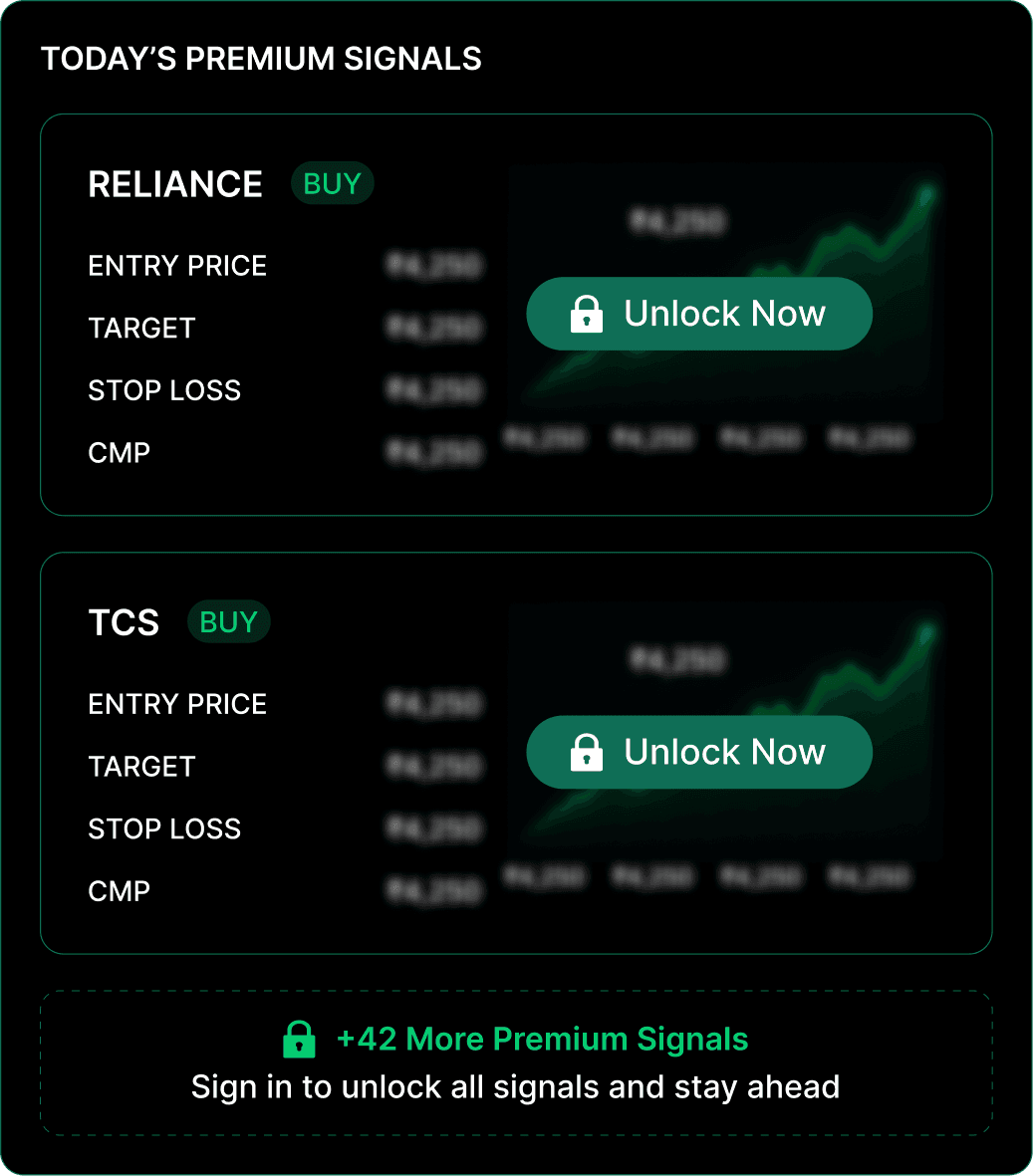
By the numbers
Trusted by thousands of Indian traders
500K+
App Downloads
31K+
Active Users
4.2
App Rating
75%+
Signal Accuracy
Invest Confidently
Grow Wisely.
StockYaari is SEBI registered stock advisor
dedicated to protecting your interests and helping
you make smarter investment decisions.
Regulated by SEBI
Submit your query or issue
Investor First
Your Safety & goals come first
Research Driven
Insightful research for better returns

SEBI Registration No.
INH000018188
100%
Compliant
Our Rating
Based on 2,000+ reviews
Everything You Need to Trade Better
Powerful tools and insights to track, analyse and grow your wealth

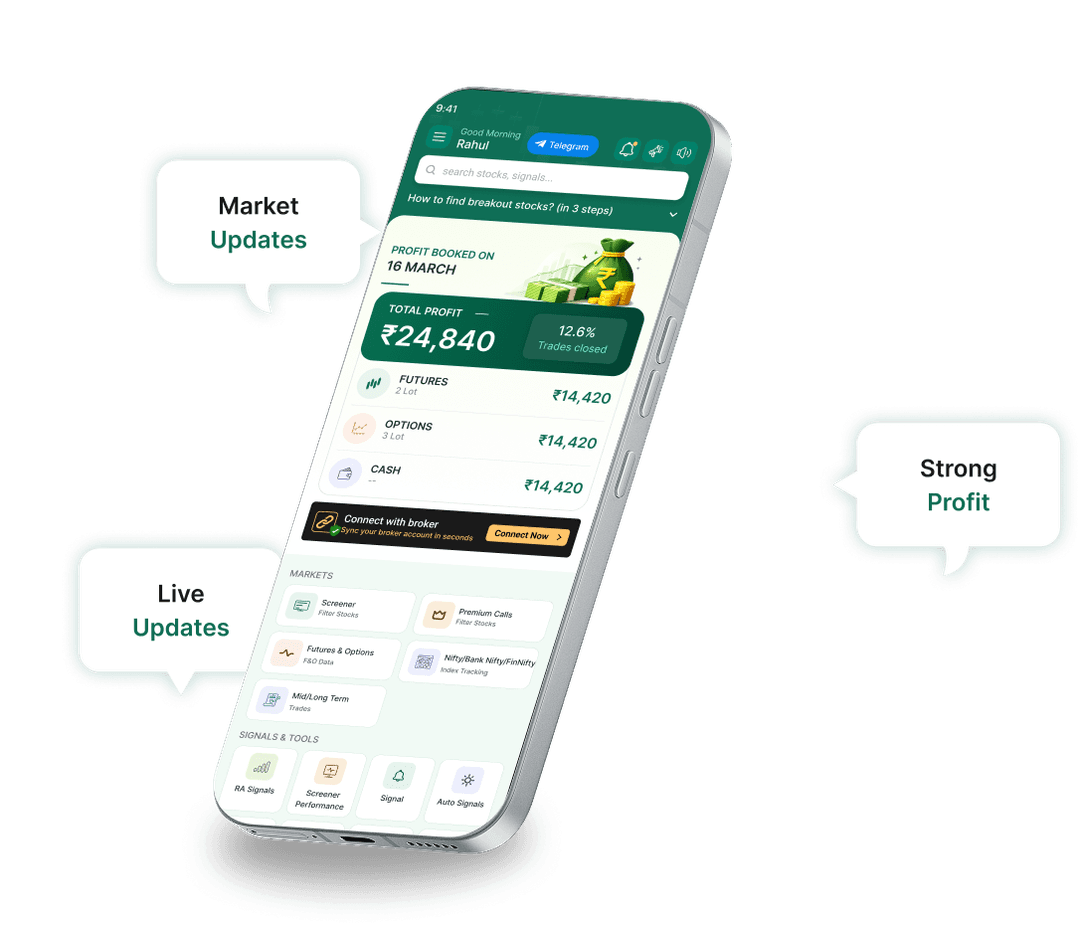
Track Your Portfolio
Monitor holdings, live P&L and invested value from a single dashboard.

Analyse Performance
Deep-dive into returns, win rate and sector-wise allocation over time.

Live Signal Alerts
Get notified the instant a buy/sell signal triggers on your watchlisted stocks.

Risk Management
Smart stop-loss tracking and risk-reward insights on every open position.
What We Offer – Powerful Tools. Smarter Decisions
Everything you need to analyse, track and grow your investments all in one place.

Research Calls
Unlimited Cash, Futures & Options research calls.
 Daily Expert Calls
- Entry & Target
- Risk Managed

Algo Trading
Auto Entry & Exit for smoother execution.
- Auto Execution
- Smart Strategies
- Faster Trades

Trading Signals
Intraday & Swing opportunities in real time.
- Live Signals
- High Accuracy
- Instant Updates

Smart Alerts
Custom Green & Red alerts for your favorite stocks.
- Price Alerts
- Market News
- Watchlist Tracking

Broker Connect
Link your broker and start trading instantly.
- Secure Login
- One-Click Connect
- Easy Trading
Join Our Community.
StockYaari is SEBI registered investment advisor dedicated to protecting your interests and helping you make smarter investment decisions.
- Daily market updates & export insights
- Exclusive strategies & opportunities
- A supportive community that grows together
100K+ Happy Investors
What our users say
Real reviews from the Google Play Store
Pawan Kumar
The watchlist feature is very useful and keeps everything in one place, making stock tracking more comfortable and less confusing.
8 people found this review helpful
Rajendra Mahto
This app saves time by showing important signals clearly, so I can focus more on planning and less on searching information.
3 people found this review helpful
Vaibhav Rastogi
Stock Yaari is a stock market signal and screener app designed for traders who want quick buy/sell indications based on algorithms. Easy to use and very helpful.
Pradip Parida
I enjoy using this app because it keeps everything simple while still giving useful signals that support better daily stock decisions.
APPU Y
Helpful app for stock market updates and F&O signals. Easy to use and provides useful insights for traders.
Destiny Midnapore
Stock Yaari is a perfect app for stock dealings — giving real-time signals and alerts for risks. Very helpful and useful, I recommend to others.
1 person found this review helpful
Frequently asked questions
Everything you need to know about StockYaari

Ready to unlock premium signals?
Sign in with your mobile number and start trading smarter today.
Quick & EasySecure & ReliableSEBI Registered